Choosing an Electric Stove Repair Company in Des Plaines
Choosing a technician for electric stove repair in Des Plaines is not a generic call. The housing stock, the age of many 240V range circuits, and the brand mix across Cook County’s northwestern suburbs shape what a competent repair looks like on site. The difference between a quick, correct diagnosis and a costly guess shows up in how a company handles power supply checks, surface element controls, and glass cooktop assessments before touching any parts. This article sets clear expectations for residents across 60016, 60018, 60017, and 60019 who need fast, correct service on an electric stove, electric range, radiant glass top, or induction cooktop.
Why electric stove repair in Des Plaines has its own pattern
Des Plaines has a large share of single-family homes built between 1950 and 1985 throughout Cumberland, Oakton Manor, Apollo, Parkwood Estates, and the Lake Park area. Many of these homes kept original or first-replacement range circuits and 240V receptacles. The age and wear of these outlets drive a local failure pattern that looks like an element problem but is not. It shows up as a burner that will not heat, an oven that takes far too long to preheat, or a cooktop that is intermittent.
In practice, a high percentage of “no heat” calls in older Des Plaines homes trace to 240V receptacle wear, terminal block heat damage on the range, or a loose neutral or hot leg at the range cord connection. This is a shareable, locally specific finding: in homes built between 1950 and 1985 around Cumberland, Oakton Manor, and the Dempster-Lee corridor, worn 240V range outlets outnumber actual radiant element failures on first diagnosis during cold months. Homeowners often misdiagnose this as a bad burner or a bad infinite switch. A competent company treats power-path confirmation as step one in every electric stove repair Des Plaines IL visit.
What a good technician checks before replacing parts
Electric cooking appliances rely on a steady 240V split-phase supply to heat correctly. On a standard range with a NEMA 14-50 or NEMA 6-50 outlet, both hot legs must deliver about 120V to neutral and 240V across the two hots. A technician should verify this at the outlet and again at the range terminal block. If one leg is weak or intermittent under load, the result is a burner that glows dim, a bake element that never reaches set temperature, or a control board that locks out with an error.
Once power integrity is confirmed, a technician moves to component-level checks. On a radiant glass top, the radiant surface element should be tested for continuity and measured against typical resistance. Infinite switches that cause “full blast or nothing” symptoms should be tested under rotation. If two burners on the same side fail at the same time on a modern cooktop, a pro looks at the surface element board that feeds those elements. That failure pattern is a known trap. It often gets misdiagnosed as two separate bad elements, yet the board is the root cause. On coil-top stoves, element ends and receptacles can carbonize and arc. That shows as blackening around the socket and a pitted terminal end on the coil.
Electric stove symptoms that point to specific faults
A single front burner that stays stuck on high points toward an infinite switch failure. A rear and front burner dying together on one side suggests a surface element board fault. An oven that never finishes preheat but the broil still glows often has a failed bake element. An oven that overshoots and then drops may have a failed oven temperature sensor or a control board with a faulty relay. A sparking sound at the rear of the range during heat-up often indicates terminal block melting or a loose spade connection at the heating element harness.
For induction cooktops in Park Ridge, Niles, Glenview, and western Des Plaines, a cold surface with a flashing error code may point to an induction coil, an inverter module fault, or a cooling fan that stalls and triggers thermal protection. Induction systems demand careful ESD-safe handling of control boards and exact part matching by model revision.
How local power and circuit age affect today’s ranges
Across the Northwest Highway and Oakton Street corridors, older homes use legacy 240V range outlets that have seen decades of plug-in cycles. Those receptacles loosen internally. The prongs on the range cord do not sit tightly. Heat builds up. Scorch marks appear on the faceplate or at the range terminal block inside the rear cover. A professional will pull the range and inspect the cord, the outlet face, and the connections inside the range. If a NEMA 14-50 outlet shows heat damage, or the terminal block inside the stove shows signs of melting, that is a safety hazard. It also explains why the oven or cooktop lost power mid-cook. The immediate fix is replacement of the damaged components and torque-checked reconnection of the cord to a new terminal block. If the home has a junction box behind the range instead of a receptacle, the wire nuts and copper conductors should be assessed for oxidation or looseness, especially in basements near the Des Plaines River corridor where humidity and seasonal moisture are higher.
Near O’Hare and along Mannheim Road and River Road, brief sags and surges are not rare. Control boards on modern Whirlpool, GE Profile, Samsung, LG, and Bosch ranges are sensitive to voltage fluctuations. It is common to see a range where burners heat but the touch panel locks up or throws a fault after a storm. Verified incoming voltage, neutral integrity, and a healthy ground connection matter on these visits. Companies that carry test equipment and understand load testing save time and reduce part-swapping.
Glass top stove realities in Des Plaines kitchens
Glass-ceramic cooktops populate many homes across 60016 and 60018. A cracked top is not cosmetic. It represents a shock risk and can let spills reach live components below. Replacement requires the correct glass panel, model-specific bracket transfer, and clean seating of the gasket. The radiant surface elements sit under the glass. When a top cracks due to an impact near the frame edge, an inspection of each radiant element for hot spots and of the limiter devices is appropriate. A professional also looks at the cause of the impact or stress. In older cabinets, a range that sits slightly out of level can shift user weight toward one corner and stress the glass near the edge. Shimming or adjusting the leveling feet during installation prevents repeat fractures.
Pricing varies by brand. A KitchenAid or Whirlpool glass top is often available with reasonable lead time. Some Samsung and LG tops require exact color and trim matching. Bosch and Electrolux cooktops have part number supersessions that a manufacturer-trained technician will track before ordering. A firm that works with OEM distribution channels can reduce mix-ups and rework.
Induction cooktop service considerations
Induction systems across newer infill builds and townhomes along South River Road operate differently from radiant elements. The coil below the surface and the inverter electronics send high frequency current into ferrous cookware. If a burner throws an error and never energizes, a pro confirms pan recognition, cooling fan operation, and the integrity of thermistors on the heat sink. Many premium brands integrate zone modules that feed two burners each. A two-burner outage on one side can mirror the surface element board failure pattern seen on radiant units. The difference is the diagnostic approach. A technician must observe error codes, check low voltage supplies on the inverter, and listen for fan noise changes under load. Cross-compatibility between model years is limited. Service data and correct ESD handling are not optional with induction.
Brand notes that matter in this market
Whirlpool and Maytag electric ranges in Des Plaines have predictable bake element and infinite switch life cycles. The parts are usually in local stock. GE Appliances and GE Profile units show strong durability in the heating hardware but can present touch panel membrane failures after many years. Frigidaire and Frigidaire Gallery radiant elements fail cleanly and are straightforward to confirm with resistance checks. Kenmore models mirror their OEM suppliers, often Whirlpool or Frigidaire, so part lookup by model number is vital. KitchenAid shares Whirlpool architecture and responds well to OEM bake element and temperature sensor swaps when heat is low.
Samsung and LG glass top stoves have capable controls but can suffer from surface element relay issues on the control board. Board repair versus replacement decisions depend on model and availability. Bosch induction and radiant cooktops present a European approach to control logic. Fault code interpretation requires brand documentation. Electrolux can segment surface controls by zone in ways that lead to two-burner outages when a single module fails. Premium brands like Thermador, Jenn-Air, Miele, Viking, and Dacor often need factory-authorized support for parts and technical bulletins. A company that carries factory authorization shortens the path from diagnosis to completion for those brands.
Common symptoms seen around Des Plaines and what they suggest
Electric stove burner not heating on a single position usually means a failed radiant surface element or a failed infinite switch. Multiple burners failed at once points to a surface element board failure or a power supply issue. A glass cooktop cracked without a direct impact suggests stress from cabinet misalignment or an uneven floor. Electric stove sparking near the rear panel strongly indicates terminal block or cord arcing at the connection point. An electric stove that will not turn off from a knob rotation almost always traces to a welded contact inside the infinite switch. Slow preheat with a functioning broil suggests a failed bake element or a partial 120V leg loss at the receptacle. A touch panel that beeps and resets during use points to board power instability, sometimes caused by a weak neutral or a surging leg of 240V.
Power supply checks are the first five minutes well spent
A trained technician working a service call off Northwest Highway or Dempster Street will often test the outlet first. A NEMA 14-50 should present two hots that measure roughly 240V across and around 120V each to neutral. If voltage sags under load, the outlet or branch circuit is suspect. On ranges with a three-wire NEMA 6-50, neutral paths differ. An experienced pro knows the grounding and neutral considerations on older vs newer installations. This is not academic. It changes how a control board sees power and whether a bake cycle completes.
Terminal blocks inside the range need inspection too. The heat of cooking, plus a slightly loose spade connector, will carbonize the block over time. Replacing a terminal block and the power cord is not expensive compared to a control board replacement. It often resolves intermittent loss of heat across both oven and cooktop. This pattern is well documented in Des Plaines homes built in the 1960s and 1970s, especially in Apollo and Parkwood Estates.
Cost ranges and the 50 percent rule
Local repair outcomes should align with fair, predictable pricing. Recent marketplace data for the Des Plaines area places a typical electric stove repair in the neighborhood of about $108 to $251, depending on the part and time on site. Diagnostic fees commonly run $75 to $100 and are often applied to the final repair when approved on the same visit. Coil burner replacements and infinite switch swaps sit near the lower end of that range. Bake element and temperature sensor work falls in the middle. Glass top replacements and induction module work sit higher due to parts cost. A competent company will help weigh the 50 percent rule. If the repair exceeds half the cost of a comparable new unit, and the range is already near the end of its service life, replacement can make sense. Good judgment depends on brand, model, part availability, and the owner’s cooking needs.
Des Plaines addresses where a quick response matters
Electric stove failures often surface during dinner prep or weekend baking. Across Downtown Des Plaines near Metropolitan Square, Lake Park condos, and single-family homes in Cumberland-Touhy, residents expect a technician who can reach them quickly through River Road, Oakton Street, and Lee Street. Proximity to I-294 and I-90 also improves dispatch times into 60016 and the 60018 cross-zip area shared with Rosemont. A company based at 95 Bradrock Dr can move across the city faster than an out-of-area franchise. That shapes whether a “no heat” situation gets fixed the same day or lingers for days.
Precision matters on ovens and temperature complaints
An electric oven that runs 25 to 50 degrees off setpoint wastes energy and ruins recipes. Proper diagnosis means checking the bake element for uniform glow, confirming the oven temperature sensor’s resistance against the expected value, and confirming the control board’s calibration if the model supports it. The sensor, often called an RTD, changes resistance with temperature. If the sensor reads far out of range at room temperature, the board cannot control preheat. Good practice includes verifying door gasket condition, because heat loss at the door can mimic a weak bake element on long roasts. This is common in older kitchens near Big Bend Lake and Forest View where original gaskets crack and leak.
Surface element switch, infinite switch, and control logic
Most radiant and coil-top stoves modulate heat with an infinite switch at each knob. When contacts weld shut, the burner runs full power whenever it is on. When the internal limiter fails, the burner pulses incorrectly or fails to turn on. Modern glass tops move that logic to a surface element board. That board governs multiple zones and relies on temperature limiters built into the elements. Failures often disable a pair of elements on the same side. A seasoned technician recognizes this pattern and proves it with voltage checks at the board connectors rather than ordering an element blindly.
Element types and how failures present
Radiant surface elements vary in wattage and shape. A small 6-inch element will present a different resistance value than a 9-inch dual element with an inner and outer coil. If a dual element affordable electric stove service heats only the inner ring, the switch or the element can be at fault. A proper test includes verifying the switch output for both rings and confirming continuity across both element circuits. Coil burner elements on classic stoves fail at the terminal ends. Look for pitting, discoloration, and arcing marks. The receptacle blocks that receive the coil prongs also degrade. Swapping a coil into a known good position isolates the fault quickly, but a pro will still meter the receptacle for proper contact and heat damage.
Choosing a company that handles old wiring and new electronics
The best fit in Des Plaines is a company that understands both sides. On one side are older 240V circuits with worn receptacles and junction boxes. On the other side are modern ranges with control boards, touch panels, door latch assemblies, and safety interlocks that must be handled carefully. Look for a shop with manufacturer-trained technicians who carry terminal blocks, range cords, radiant elements, infinite switches, temperature sensors, and common boards for Whirlpool, GE, Frigidaire, Maytag, Kenmore, and KitchenAid. For Samsung, LG, Bosch, Electrolux, and premium lines like Thermador, Viking, Jenn-Air, Miele, Dacor, and Fisher and Paykel, factory-authorized access to parts and technical bulletins shortens downtime.
Local scenarios that influence the first visit
In a 1960s ranch near Oakton Manor, a technician might discover a loose NEMA 6-50 outlet with heat staining and a range cord that has been reseated several times. In a condo along South River Road, the stove may tie into a shared panel where an intermittent breaker interrupts one leg of 240V during peak demand. In a split-level home near the Dempster Street and Lee Street corridor, the range might sit on a sloped floor that stresses the glass top. In each scenario, the correct fix begins with a site-aware inspection, not a parts guess. That is why local experience in Cook County’s northwestern suburbs pays off.
What a professional report should look like
A credible technician provides a clear explanation. Expect a short write-up that states the incoming voltage readings, the status of the terminal block and range cord, the result of element and switch tests, electric stove repair in Des Plaines IL and any observed heat damage. If the fix is a bake element and sensor, the report should list part numbers installed and the post-repair temperature test at 350 degrees. For glass top replacements, the report should include the part number of the glass panel, confirmation of gasket transfer, and functional checks of all surface elements after reassembly. If a control board is replaced, the technician should note software revision if present and confirm successful calibration.
Why two burners fail together and why it matters
Across Glenview, Mount Prospect, and Des Plaines, two-burner failures on the same side of a glass top create confusion. Many residents assume two separate elements failed at the same time. In practice, the surface element board that distributes power to each zone often fails on one output section, taking down both burners it feeds. Technicians familiar with this pattern go straight to the board, meter the outputs, and confirm the defect. That prevents unnecessary replacement of two good radiant elements and avoids an extra trip for the right part.
Fire and shock risk signals that should not be ignored
Arcing noises, visible sparks at the rear, a burning odor when the oven starts, or a melted plug are red flags. The range should be disconnected and left off until a professional inspects it. Terminal block failures and scorched receptacles are visible once the unit is pulled. In older homes across Riverview and Forest View, aluminum branch wiring or mixed copper-aluminum connections can also exist. A technician must identify and handle those correctly to avoid overheating at connections.
Scheduling across the city without delay
Routing across Northwest Highway, Mannheim Road, Touhy Avenue, and Golf Road allows quick access to Downtown Des Plaines, the Cumberland-Touhy corridor, the Dempster-Lee corridor, and properties near Rivers Casino Des Plaines on South River Road. A local shop stocked with common Whirlpool, GE, Frigidaire, Maytag, Kenmore, and KitchenAid parts often closes a call on the first trip. If a glass top or special-order control board is required, a manufacturer-authorized parts channel removes guesswork and shortens turnaround.
Questions to ask before booking an electric stove repair visit
- Do technicians verify 240V supply and inspect the terminal block and range cord before replacing parts? Does the company carry common radiant elements, infinite switches, and bake elements for major brands on the truck? Is the business factory-authorized for Whirlpool, GE, Frigidaire, Maytag, KitchenAid, Samsung, LG, Bosch, or Electrolux? Will the diagnostic fee be applied to the repair if approved during the initial visit? Can they provide same-day or next-day scheduling in 60016 or 60018 from a Des Plaines base?
Red flags that slow down your repair
- Immediate part recommendations without checking the outlet, terminal block, and range cord under load. No mention of model and serial verification or brand bulletins for known issues. Reluctance to discuss whether two burners failed due to a shared surface element board. Difficulty naming local routes or neighborhoods for timing, such as Oakton Street or Downtown Des Plaines. Unclear pricing that does not separate diagnostic from parts and labor.
What a complete on-site electric range diagnostic includes
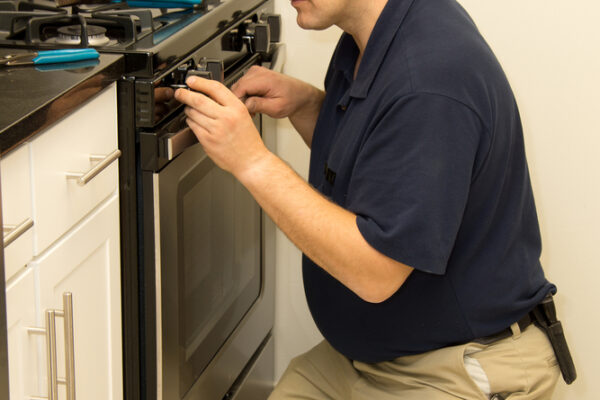
The visit should open with a brief conversation about the symptom, then a safe power-off inspection. The technician confirms the model and serial to secure exact part matches. Then they test incoming voltage at the receptacle or junction box, pull the rear cover to inspect the terminal block, and meter the suspect components. On radiant tops, that includes each surface element, the surface element switch or infinite switch, and any surface element board if the model has one. In ovens, the bake element, broil element, convection element if present, and the oven temperature sensor are checked. On control complaints, the board and touch panel receive attention after power-path confirmation. The expected outcome is a clear problem statement, a quote, and if approved, completion on the spot when parts are in stock.
Examples from around Des Plaines
In a 60016 ranch near Cumberland, a resident reported that two left burners died the same day. Voltage and cord were good. Metering the surface element board showed no output on one channel. Replacing the board restored both burners. In a 60018 condo along River Road, the oven never reached temperature while the broil worked. The bake element was open on a continuity test. An OEM bake element install and sensor confirmation returned accurate preheats. On Northwest Highway near the Des Plaines Theatre, a coil-top stove tripped the breaker intermittently during boil. The terminal block had carbon tracking from a loose connector. A new terminal block and cord cured the trip.
Why local experience improves first-visit fixes
Electric ranges present repeatable patterns. In Des Plaines, those patterns tie to circuit age, brand prevalence, and local supply chains. Manufacturer-trained technicians who work daily in Cook County’s northwestern corridor spot these patterns faster. They stock the right radiant elements, bake elements, infinite switches, temperature sensors, terminal blocks, and cords. They know when a whirlpool-style oven sensor is a likely fix, and when a GE Profile touch panel needs special handling. That alignment between local knowledge and brand training raises first-visit completion rates and keeps costs within the typical $108 to $251 repair range cited earlier.
Decision framework on repair, parts, and turnaround
Most standard radiant element or bake element jobs finish on the first visit if the company arrives prepared. Glass top replacements, induction modules, or rare control boards may require a follow-up once parts arrive. A credible shop is transparent about lead times, especially for brands like Bosch, Electrolux, or premium European models seen in neighborhoods with more European appliances. For high-dollar repairs on older units, the 50 percent rule guides whether to proceed. A technician should state the total installed cost and provide a realistic service life expectation after the repair. That is how a homeowner in 60017 or 60019 makes a sound decision without surprises.
Safety and compliance on electric ranges
Any work at the range power connections must respect Illinois electrical code. Secure torque values at the terminal block, correct conductor sizes, and proper strain relief at the cord entry are non-negotiable. Ranges that move in and out of tight cabinet openings can stress the cord. A professional will verify that the cord has enough slack to pull the range safely without tearing connections loose. When replacing outlets, using a listed NEMA 14-50 or 6-50 receptacle rated for the load and installing it flush and secure to the wall prevents heat buildup. On induction units, safe discharge of capacitors and ESD precautions protect sensitive electronics.
How local logistics support timely service
A shop headquartered at 95 Bradrock Dr sits minutes from Oakton Community College, Rivers Casino, and the Lake Opeka and Lake Park areas. Access to I-294, I-90, and surface roads like Touhy Avenue, Dempster Street, Golf Road, and Mannheim Road supports same-day routes into Park Ridge, Mount Prospect, Niles, Glenview, Rosemont, and Elk Grove Village. That reach matters when a range goes dead an hour before dinner. The difference between a local team and a distant franchise becomes obvious in response times and parts staging.
What homeowners in 60016 and 60018 appreciate in a service partner
Clarity, speed, and accuracy form the core. Residents want a short window for arrival, a technician who respects the kitchen, and a diagnosis that matches the symptom and the evidence. They prefer OEM parts when cost-effective and expect a fair diagnostic that applies to the work if approved. They want a report that could be shared with a property manager or a real estate agent without translation, with line items that reference the actual components, such as a bake element, oven temperature sensor, surface element switch, or surface element board.
Why electric stove repair Des Plaines IL searches point to specialists
The phrase electric stove repair Des Plaines IL gets typed when heat is gone now. A generalist who dabbles in appliance repair will not match the speed or the hit rate of a company that does ranges and ovens every day with factory support. The difference shows on dual-failure burner cases, where a specialist jumps to the surface element board test. It also shows on older outlets where the pro checks the 240V supply first. That mastery prevents return trips, keeps costs aligned with local benchmarks, and gets kitchens back in service fast across Downtown Des Plaines, Lake Park, and the Northwest Highway corridor.
Choosing a company that stands behind the work
Warranties on parts and labor signal confidence. So do clear invoices and model-specific parts listed for traceability. A company that is licensed and insured, with factory authorization on major brands, operates with a standard that protects the homeowner. In a city with a wide range of homes from 1950s ranches to recent infill construction, a partner that respects both old wiring and new electronics reduces risk and shortens downtime.
Service positioning and how to book the right visit
Unique Repair Services Inc. Operates locally from 95 Bradrock Dr, Des Plaines, IL 60018 and focuses on fast, correct diagnostics for electric stove, electric range, radiant glass top, and induction cooktop issues. The company is a licensed Illinois contractor and an insured appliance repair service with manufacturer-trained technicians and factory-authorized service coverage across major brands including Whirlpool, GE, Frigidaire, Maytag, Kenmore, KitchenAid, LG, Samsung, Bosch, and Electrolux, with specialty access for premium lines. Same-day service capability and next-day appointment availability are typical across primary service zips 60016, 60017, 60018, and 60019, as well as neighboring Park Ridge, Mount Prospect, Niles, and Glenview. Transparent upfront pricing applies, with a diagnostic fee that is applied to the repair when approved on the visit. Parts and workmanship warranties back completed repairs.
To schedule electric stove repair in Des Plaines, call +1-847-318-3363 or visit the electric stove service page at https://uniquerepair.com/service-areas/des-plaines/electric-stove-repair-services/. The Google Business Profile and directions are available at https://www.google.com/maps?cid=4938574192076092876. A dispatcher will confirm address details, model numbers, and symptoms, and assign a technician who carries common elements, infinite switches, surface element boards, temperature sensors, terminal blocks, and cords for a strong first-visit completion rate. Service routing covers Downtown Des Plaines, the Lake Park area near Lake Opeka, the Cumberland and Oakton Manor neighborhoods, the Dempster-Lee corridor, the Northwest Highway corridor, and properties along River Road, Mannheim Road, Touhy Avenue, Oakton Street, and Golf Road.
Unique Repair Services, Inc.
95 Bradrock Dr
Des Plaines, IL 60018
Phone: (847) 318-3363
Email: [email protected]
Hours:
Monday to Thursday: 8AM–6PM
Friday: 8AM–5PM
Website: https://uniquerepair.com
Follow Us: Facebook